Reflections on AI and cornerstones of standard-setting in times of change
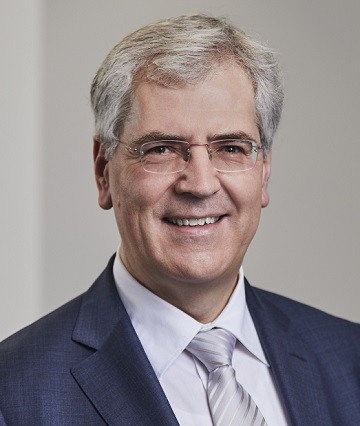
Andreas Barckow, whose term as Chair of the International Accounting Standards Board (IASB) ended on 30 June 2026, delivered a keynote address at the IFRS Foundation Conference on 29 June 2026. He shared personal reflections on the implications of artificial intelligence (AI) for financial reporting and on the enduring cornerstones of standard-setting in times of change.
This is the prepared version of the speech and might differ slightly from the oral version.
Introduction
This will be my last address as Chair of the IASB to you and I have been reflecting on the speeches I have delivered over my tenure. In my first conference speech as Chair of the IASB, I spoke about the priorities that would shape the IASB’s work in the years ahead. Since then, a recurring theme has been the environment in which we operate, as reflected in speeches such as Communicating with investors in uncertain times; Complexity in focus; and Financial reporting in a fragmenting world.
Uncertainty, complexity and fragmentation. Those pressures evolve, and they do not seem to be temporary features of the geopolitical landscape. They have become part of the conditions in which companies operate and report, auditors exercise judgement and investors make decisions.
But fragmentation, complexity and uncertainty are by no means confined to geopolitics only. Today, I want to focus on another area that has been dominating newspaper headlines for some time: the rapid proliferation of generative and agentic AI and the transformative change it is bringing to all areas of society. Let me offer some reflections on the significance of AI for our work.
Reflections on judgement in an AI-enabled world
Technological change is reshaping how information and data is produced, analysed and used. It offers real opportunities, but it also raises important questions about judgement, evidence and trust. Virtually every week you can read about a new area of life where AI is being tested or implemented; and at the same time, you read about hallucinations, false connections and hard-to-believe errors in reports and publications.
We have seen the opportunities of using AI in our own work at the IASB. Disclosure analysis is a good example. AI can scan large numbers of financial reports from around the world against specific disclosure requirements and tell us how those requirements are being applied in practice. Work that used to take a significant amount of time can now be completed in a fraction of it.
Speed clearly has value, but in financial reporting, it is not enough. Information must be robust, reliable and trusted. People still have to exercise judgement over the information provided through AI. And that judgment depends on experience—experience gained through thorough analysis, through making and correcting mistakes, through challenging information presented, through repetition.
Many of us in this room learned the hard way early in our careers. We built judgement by performing the analysis ourselves, by making mistakes and drawing lessons from them. Over time, experienced professionals develop something else: a sense of when something deserves a second look rather than simply accepting things at face value. It can appear intuitive but that intuition is rarely instinctive. It is built through repeated exposure to facts, competing arguments and difficult decisions.
Accounting as a domain might appear well-suited to AI. It is bound by principles, concepts and rules. But everyone in this room knows that accounting is not simply a matter of applying rules. Take our literature as an example. The Standards have been developed over a period of 50 years by different people with different skills and beliefs, at different points in time and in different global economic environments. Sometimes a particular requirement only exists because it was needed to get a final Standard over the finishing line or through stakeholder acceptance.
Several of our Standards contain exceptions to and exemptions from the general principles as well as policy choices. There are nuances, differences in terminology and areas where judgement and context-specific decisions are required. There are even inconsistencies between the Standards—for good reason, I would think. That is why the human role remains essential, at least for now.
My concern is not that AI will make people less capable. My concern is that if we remove too much of the ground-up work, we may also remove the experiences through which judgement is formed and sharpened. In many areas and professions, AI is taking over the more mechanical parts of work that used to be carried out by the more junior staff. We read that this takeover does not render their work superfluous, but leaves people with more time for judgement, problem-solving and client advice.
I do not think the useful question is whether AI will matter. It already does. The more important question is how we use AI while preserving the experience and judgement on which high-quality financial reporting depends. Have we thought carefully enough about what happens if we automate too much of the work through which junior professionals learn? How do we ensure that the next generation of accountants, auditors and standard-setters can still learn, practise and develop judgement?
I do not pretend to have the answers. But I do believe that these issues deserve our attention now. They go directly to how we train, supervise and develop people.
Reflections on cornerstones of standard-setting
AI is only one example of the disruption this profession will have to navigate. Other changes will follow and many will be impossible to predict, just as I could not have anticipated many of the developments that have unfolded since I first addressed this conference as Chair. But as I reflect on my time in this role, three cornerstones of our work have remained a constant and have become even more important, not less, in times of change.
Listen
The first cornerstone is the importance of listening.
For standard-setters, listening is indispensable. As the global standard-setter, we must listen carefully, not only to the largest jurisdictions and stakeholders, but also to the smaller ones and those whose perspectives might otherwise be overlooked. Our stakeholders want to explain their views and concerns in their own language and from their own perspective. They expect us to engage, to ask questions and to remain open-minded.
Not every stakeholder will agree with every decision we make. But when people feel heard and when they understand the reasoning behind a decision, even if they would have preferred a different outcome, trust grows. That trust—in the process, in the institution and in one another—is worth protecting. It is also, I think, the part of this work that no amount of automation can take on for us. AI cannot replace reflection and human interaction on which good standard-setting depends.
Explain and communicate
Closely related to listening is the significance of explaining and communicating our views and decisions.
Standard-setters too often assume that every one of their stakeholders follow every step of their work. That every decision is known and fully understood. Nothing could be more wrong than this.
Communication is not self-serving. It is key, particularly for a global standard-setter that serves such a diverse ecosystem. Every one of us is constantly bombarded with news feeds, social media posts, webcasts, podcasts, you name it. But that should not be an excuse for staying mute. It rather emphasises on focusing on what matters, and why it matters. Most of our stakeholders want to know how our work may impact and be relevant to their businesses, so that is where our communication should be centred.
Be disciplined
My third cornerstone is the importance of discipline.
Over the past five years, the IASB has delivered a substantial programme of work. But the number of projects completed is not the point. The point is that high-quality standard-setting requires focus. It requires prioritisation. And sometimes it requires saying ‘no’.
Four years ago, standing at this conference, I said that less is more. I believe that even more strongly today. A focused and realistic work plan allows the IASB to devote more time and attention to each project. It also gives stakeholders more opportunity to engage meaningfully and influence outcomes. As I prepare to leave, I believe the IASB enters its next chapter with a focused agenda and in a strong position to meet any challenges ahead.
Conclusion
The world in which the next Chair will operate is likely to be even more fragmented than the one I inherited. Yet I remain convinced that the case for a shared global financial reporting language is as strong as ever. Capital still crosses borders. Investors still need information they can compare. Risks still need to be understood.
Global accounting standards are one of the quieter achievements of global cooperation, but also one of the most important. While technology will continue to change how information is accessed and analysed, financial statements remain the bedrock of investor decision-making because they provide something that data alone cannot: context, discipline and trust.
I therefore leave with confidence: confidence in the enduring importance of global accounting standards, confidence in this institution and the people who serve it, and confidence that the IASB is well placed to meet whatever challenges lie ahead.
It has been a privilege to spend part of my professional life in this remarkable organisation and to work alongside colleagues and stakeholders who care deeply about better reporting and its contribution to stronger, more resilient capital markets.
From the moment I took on this role, many of you welcomed me warmly. I will always value that support and your engagement with the IASB and its work. It has been an honour to serve this organisation and this community.
Thank you.
