Show Sections
At a glance
Investors and other stakeholders consistently emphasise the importance of connections between a company’s financial statements and its other investor focused financial disclosures, such as those related to sustainability.
To facilitate the provision of connected financial information to investors, IFRS Accounting Standards and IFRS Sustainability Disclosure Standards are intended to work well together. However, they need not be used together. They can be applied separately, and alongside third parties’ materials.
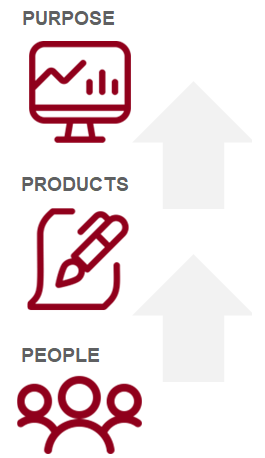
Connections between IFRS Accounting and IFRS Sustainability involve:
- purpose—comprehensive and coherent financial information for investors in general purpose financial reports prepared applying IFRS Standards.
- products—compatible and complementary IFRS Accounting Standards and IFRS Sustainability Disclosure Standards and the related materials.
- people—where appropriate, collaborative working between IASB and ISSB teams on the boards’ projects and other activities.

Shared purpose
Both financial statements and sustainability-related financial disclosures enable investors and other capital market participants to make informed decisions. Our stakeholders, in particular investors, have consistently emphasised the importance of those reports providing connected and coherent information about a company.
The International Accounting Standards Board (IASB) and the International Sustainability Standards Board (ISSB) are committed to developing IFRS Standards that enable companies to meet these needs. This commitment is embedded in the IFRS Foundation Constitution which establishes the focus on high-quality reporting to meet the needs of capital markets and requires the boards to work together towards their shared purpose.

Complementary products
To meet investor demand for high-quality comprehensive financial information, we work to ensure that our products—particularly IFRS Accounting Standards and IFRS Sustainability Disclosure Standards and our digital taxonomies that facilitate digital reporting—are well-coordinated and result in complementary and coherent information about a company.
That means that we develop complementary requirements that use consistent language and terminology, compatible or shared concepts and avoid conflicts, gaps and unintended overlaps. While IFRS Accounting Standards and IFRS Sustainability Disclosure Standards work well together, they need not be applied together. They can be applied separately and alongside third parties’ materials.

Collaborative working
To deliver coordinated complementary products, we have processes in place to ensure that while we work independently and each board focuses on their respective work plan, we do so in a connected manner.
Our connected working includes information and knowledge sharing between the boards and their technical staff, coordinated stakeholder engagement and, where appropriate, collaboration on projects and other activities and consultation with each other.
