Emmanuel Faber’s speech at the 2026 Beijing International Sustainability Conference
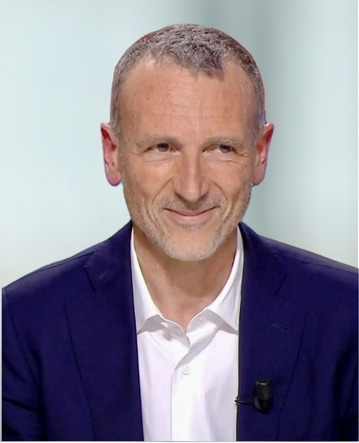
My dear friends, colleagues and guests in this room, welcome to the International Sustainability Conference here in Beijing. It’s my great pleasure to be with you all. So many familiar faces that we see all around the world, as well as here in Beijing, gathered again to discuss the progress of our collective endeavour.
I would like to thank Director General Lin from the Ministry of Finance here in China for his continued attendance and interest in this conference, and I look forward to his own introductory remarks. I would also like to express my sincere gratitude to all supporting organisations: the Multilateral Cooperation Center for Development Finance, the Shanghai Institutes for International Studies, the China Construction Bank and the Association of Chartered Certified Accountants. In particular, I would like to extend my heartfelt thanks to the Multilateral Cooperation Center for Development Finance for its work. It is thanks to your contribution and dedication that we have been able to create such an open, practical and productive platform.
We had a very productive board week this week in our Beijing office. Important decisions were made yesterday. Sue and I shared a summary of some of those decisions that you can find on our usual monthly broadcast.
The conversation was about important decisions to extend the disclosures that would enhance the way that companies report on nature, particularly on risks and opportunities that give rise to financially material information. I won’t comment on the substance of that, but this is to say that we continue to build, in a proportionate, considerate manner, the global baseline that we were tasked to build on behalf of all of us around this room and beyond.
We are also coming with the energy of the additional decision that we made yesterday to move forward on the form and substance of our nature disclosures. We’re committed to publishing an exposure draft about that work at the next Biodiversity COP in October, because we believe and we understand that, both from a regulatory standpoint and an investor standpoint, there is a need for more precise disclosures when it comes to the requirements on nature-related topics.
Adoption of our Standards continues with momentum. I sometimes hear that ESG is something of the past—that now it’s all about geopolitics; it’s all about AI and other things. Well, the truth is that ISSB Standards have never been about ESG. We’re not about acronyms and separate disclosures and metrics. We are building a comprehensive language that will help—maybe not entirely with the sustainability of the planet, but certainly with the sustainability of business models and the future-proofing of capital markets—with better information for better decisions. This is our remit. This is what we are working for. And when we discuss what truly matters for companies worldwide, and what truly matters for investors, banks and insurance companies, it is resilience—the resilience of business models. How fit for the future are they, given the fact that geopolitics is not putting sustainability topics aside? It is making the sustainability topics that relate to business models even more acute, because geopolitics is about changing supply chains, availability of resources, critical minerals, agriculture and other goods. It’s about access to water; it’s about issues in transition risks that may not have been foreseen before. So, a tool that allows companies to express to their shareholders and their investors, in a convincing, reliable manner, their ability to thrive into a complex world—even more volatile, potentially, than we thought it was a few years ago—is even more a topic for today than it was in the past. And I can tell you that when we meet CEOs around the world, CFOs, investors, this is what they are telling us.
There are about 40, actually 42 now, jurisdictions that are adopting or otherwise using the ISSB Standards or have committed to do that. That’s a growing number. By the way, each time we have this conference here in Beijing—and this is the fourth year—our numbers have grown by 10. First time, 10; second, 20; third time, 30; now 40. I can tell you, next year, there will be more than 50. That’s the arithmetic of what I’m describing here. The most recent to join the family of adopting jurisdictions have been Peru, Ethiopia and Oman, and there will be more to come.
They are coming for two reasons. One, you in this room have created, with our work, an incredible family and community of markets and regulators in markets that represent a driving force now. There is a gravitational force in what you have collectively built with our Standards. Sixty per cent of global GDP is a gravitational force. In most of the jurisdictions worldwide, the jurisdictions that have adopted the Standards represent more than half of their trade and foreign direct investments. So, there is logic through the value chains that now more and more jurisdictions are aggregated to the community that you have built.
The other thing is, they see that trade is facilitated through the use of seamless information that connects—at a lower cost and leading to better decisions—jurisdictions, the companies in those jurisdictions and investors, when it comes to foreign direct investment. So, we start seeing that ball rolling and this is what continues to create that momentum.
I said last year in Beijing that there is now a shared responsibility in this room, and beyond this room, for what essentially is becoming market infrastructure that you are building—you investors, you practitioners, companies and, first and foremost, regulators, by mandatorily requiring the use of ISSB Standards in your jurisdictions. You are creating a common good; that is a shared responsibility. We are only a small part of that ecosystem.
And that’s the second thing I’d like to share: the next stage that we have launched this year. We have expanded our jurisdictional adopters working group to a group of 40 jurisdictions, including China. That group will allow us to have a platform where we can discuss the next stages of adoption from a strategic standpoint.
What we have decided to drive with that group is an initiative that we have called ISSB passporting, which would allow, in those jurisdictions, foreign private issuers and subsidiaries of international companies that operate in a domestic jurisdiction to report against the requirements in that particular jurisdiction using the ISSB Standards as issued by the ISSB. ISSB passporting facilitates trade and foreign direct investment by allowing use of the simplest, original language that was issued and declared fit for purpose by IOSCO when they endorsed the ISSB Standards.
I have to say that initiative is finding some traction among the members of the jurisdictional adopters working group. I want to commend Director General Lin of the Ministry of Finance in China for initial thought leadership on that initiative, but also other jurisdictions that are here, because they see how this passporting can further create a seamless language for the growing community. We will be advancing that initiative with our dedicated engagement teams and regulatory teams to ensure that the more we progress in adoption, the simpler it will be for preparers to report against, and also the simpler it will be for investors—reading the same language as much as possible—to make appropriate capital allocation decisions.
So let me finish by saying that we continue to see that momentum. That momentum is here because of all of you. I think your presence here is a sign of this shared interest. I wouldn't want to finish without mentioning the absolutely essential role of implementing partners for us. Among those, one of the most important is the multilateral development banks. The AIIB is among the most pioneering adopters and foremost proponents of ISSB Standards in the MDB community. The AIIB has issued its second ISSB report this year, further completing how the report has been populated.
I want to commend the leadership team and President Zou for this work. Vice President Ajay is here with us and will speak after us.
I think this is an incredibly powerful example of how multilateral development banks can drive adoption, because they have a role in budget support for regulators. As we’ve seen in many cases, they are a convening place for a number of their customers, members or clients—depending on how these groups are described within their own structure. They are an essential part of what is the most important phase to come: the quality implementation and application of the Standards in a growing number of emerging and developing economies. So, I just wanted to end my introduction by saying how important and relevant it is that we are meeting in this particular building. And thank you again for having us.
