Address to the EP ECON Committee, 18 March
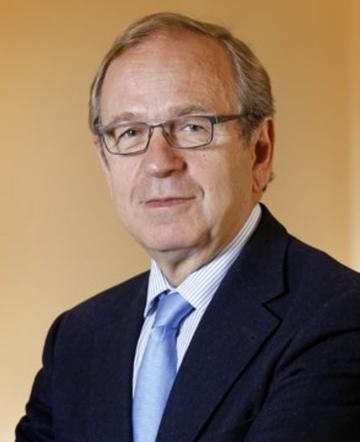
Erkki Liikanen, Chair of the Trustees, IFRS Foundation
We are living in a politically fragmented world. In the 1990s, we moved from two superpowers to one.
Then, the picture changed again. We now live in a multipolar world with the US and China, as well as the EU, India and others, all playing prominent roles.
Various scenarios are anticipated for the coming decade. Bruegel, a well-known Brussels think tank that I also chair, has presented three. We need to be prepared.
First, a collapse in international cooperation. We see this all around us. In this world, what are the essential global public goods and who provides them? Nuclear proliferation? Can we still act together on climate change? Who steps up to lead? A very challenging scenario.
Second, a return to the world of blocs. A US-led bloc, a China-led bloc and a group of non-aligned countries. In this scenario, the EU’s choices matter a great deal. This scenario is plausible.
Third, reinvented multilateralism. Essential public goods exist where the costs of inaction are high. Nuclear proliferation, finance and trade and climate change are important areas.
The third scenario is the most optimistic, but every scenario involves protecting public goods.
Where does cooperation still work, and where do countries cooperate, even if not all join in?
Finance is a very important pre-condition for growth and welfare.
We are seeing tremendous public challenges. Meeting them will require huge public and private investment. That is why global public goods matter.
Mario Draghi made this point in his report on European competitiveness. Achieving political and policy goals requires creating the right incentives to attract and retain private capital.
That capital depends on sound corporate reporting. Investors invest when they understand the risks and opportunities associated with investing in a particular company, which is the fundamental point of corporate reporting.
International Accounting Standards
The EU adopted IFRS Accounting Standards more than 20 years ago. That choice encouraged the rest of the world to follow suit.
Better corporate reporting improves market liquidity. Many studies prove this fact. It also lowers the cost of capital, which is also critical for growth.
Because of IFRS Accounting Standards, the financial statements of companies listed in the EU are accepted worldwide, including in the US and more than 140 other countries, delivering massive benefits to EU-based companies.
Establishing standards for global finance is a remarkable example of leadership by Europe and others. International accounting standards are a very important public good. We must keep them in good shape. That takes stable, diversified funding to protect quality and independence. The EU has played a key role. We will need that support even more going forward.
On accounting standards, all jurisdictions have cooperated globally. I believe that cooperation can, and should, continue.
Andreas Barckow, the Chair of the International Accounting Standards Board will provide an update on developments in this area.
International Sustainability Standards
The International Sustainability Standards Board was created in 2021, at the Glasgow COP26 summit. The decision was demand-driven and shaped through broad global consultation. The first two Standards, IFRS S1 and IFRS S2, took effect in 2023.
There is not yet global consensus, but we have seen strong demand. Currently, 40 jurisdictions representing more than 60% of global GDP have adopted or announced plans to use ISSB Standards. They include jurisdictions in Asia, Latin America and Europe, including many countries in the Global South. They want to satisfy investors’ demands for high-quality, globally comparable sustainability disclosures.
The ISSB has worked closely with the European Commission, EFRAG and others to establish a global baseline of sustainability disclosure standards for the financial markets. ISSB Standards are investor-focused and proportionate in scope and use.
The EU and EFRAG have chosen a broader approach. We are working to ensure EU companies can meet EU reporting requirements and, in doing so, also comply with ISSB Standards. This collaborative approach minimises cost, complexity and risk for European companies with global activities. Recent research shows that ISSB disclosures top the list of investor demands for sustainability disclosures.1 Our work with EFRAG helps to satisfy this need.
Emmanuel Faber, the Chair of the International Sustainability Standards Board will speak further on this topic.
Conclusion
IFRS Standards are essential global public goods. They need to be protected and kept updated over time. Investors trust information prepared in accordance with IFRS Standards, and trust is central to attracting private capital, which in turn is essential for the EU to achieve its public-policy goals.
A consistent global approach brings real economic benefits. It improves transparency and accountability. It reduces cost and complexity for companies. It can reduce the cost of capital. It supports better investment decisions and cross-border trade.
As you can see, Europe—and all jurisdictions involved in making this happen—have a lot to be proud of. It’s a remarkable success story. However, we also face two main challenges.
First, we, like others, recognise a more complex geopolitical landscape and differing policy and political preferences. We work closely with other international organisations and key stakeholders around the world, such as the European Commission, to protect our global approach. If you believe in high-quality reporting without competitive distortions, you need an international approach.
Second, good standard-setting requires investment. Every change affects thousands of companies in hundreds of jurisdictions. We must consult widely and follow a careful due process. And we must help jurisdictions and companies build capacity for new requirements.
The EU has supported our work for more than two decades, but that funding has not kept pace with inflation. We look forward to working with you, to address this matter.
