Emmanuel Faber’s speech at the 2026 Frankfurt Sustainability Standards Conference
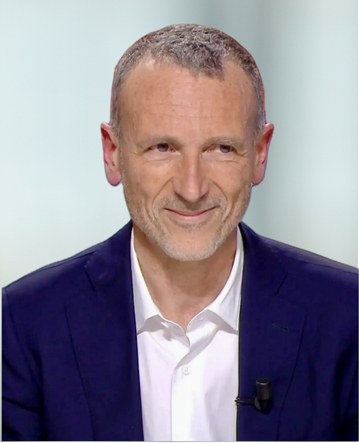
Shaping the Future—The Evolving Role of Standard-setters in a Dynamic Global Landscape
Welcome. Let me start by officially thanking the House of Finance, the Leibniz Institute for Financial Research SAFE, the Accounting Standards Committee of Germany, DRSC, Goethe University Frankfurt, and Deutsche Börse Group for their continued support of this event.
I've been given the difficult task of devoting 15 minutes to the huge words you can see in the title of this session: the dynamic global landscape and shaping the future.
I guess those words are the way that we can politically, correctly, describe the world in which we live every day—a dynamic landscape, to say the least.
Over a year or so, we have been hearing many things about our work and how it is, or is not, relevant in this dynamic place.
We believe it is still relevant.
The thing we’ve probably heard most is that this is the end of ESG. ESG is part of the past, and there’s no use for that, no place for that, no time for that anymore.
It’s all about geopolitics now.
There are several ways of looking at this. The first is yes, probably. And I don’t think it is a bad thing in any sense.
The era of ESG has been a super-important one, when environment, social and governance were the acronym for sustainability.
Everything that the business, in delivering every day, didn’t think about and was trying to explain stuff about.
And that created the myriad of acronyms. Many of them are still there. A few have been consolidated. Others will disappear.
But in essence, this is the previous generation. They have done incredible work. Some continue to operate. Much of their underlying work is still part of the ISSB’s work, as well as the CSRD and ESRS here in Europe. But using ESG as the way to express and structure that has passed.
We are now in a place where what is required is a language, an algorithm that integrates all of that into the business’s decision making on risks, on strategies, on resilience, on governance. And ultimately on reporting to investors, as far as the ISSB is concerned, and to other stakeholders—for the many others that have multiple lenses and stakeholders to cater to.
It is essential not to lose the substance of ESG, to keep the core of what it actually brings, but to gradually move out of that space.
But ESG also has to be built on to get to exactly where the capital markets need to go in terms of sustainability disclosures.
Geopolitics is, of course, all over the place.
There is no doubt when you speak to CFOs, to CEOs—even to CSOs—to chairs and to investors, geopolitics is all over the place.
But there are three things I’d say about how this is relevant for our work.
The first is, if you think about sustainability standards as requiring companies to look at all their value chains and to look at the relationships, the dependencies, the impact that they have in their own operations, across all the value chains and across time horizons. Then these requirements are even more relevant with a geopolitical world that is fragmenting.
Because what geopolitics does is close supply chains—access to water, access to logistics, access to markets, access to critical materials.
Maybe sometimes even access to talent—passports that are given or not, visas that are allowed or not.
These issues may not all be material for every company, but there is absolutely no doubt that a sustainability disclosure report for investors to use in capital allocation, in the era of a fragmenting geopolitical world, is absolutely even more relevant today than it was before this all started.
When the world was linear, in the 1980s and early 2000s, when everything seemed to be globalising and normalising and standardising, you could think you may not completely need that information.
But because there were, apparently, fewer and fewer risks—and opportunities, because any risk is competitively an opportunity, depending on where you sit on the fence of the risk, and how you address it—those are going to be absolutely critical at a time when the market-to-book ratio has never been as high as it is, and the intangible parts of the balance sheet have never been as high as they are today.
So, complementing financial statements and management reports with sustainability disclosures in this world is even more relevant.
The second thing is that if you look over time horizons and you run climate-related scenarios on your value chains, and you run nature-related scenarios on some specific locations, on access to water, on demographics in where you want to serve customers or hire employees, you will find that there is obviously an amplification. Climate multiplied by geopolitics is the case to report using sustainability standards.
Sustainability in the sense that we mean here at the ISSB, meaning informing investors and capital allocation with the adequate pricing of risks and opportunities.
The third thing I’d say about geopolitics and the way it happens today is that it’s fragmenting.
It’s a polarising world. It’s a radicalising world. It’s a fragmenting world. And, so, it has to be relevant to what we do, because that fragmentation potentially leads to a fragmentation of the languages that are being spoken about those risks and those opportunities.
The language is about economics, what matters and what does not matter.
Because language is just a function of thought. It defines thoughts, but it's a function of thought.
So, it is absolutely clear that in our international work—and therefore having to navigate and hear and listen to so many jurisdictions that are adopting, or that are considering adopting—we must ensure that we understand how to continue our work in a world that is probably, from a sustainability disclosure standpoint, not as simple or as consensual as it was when we started in 2021.
I think the recipe—and it’s not huge wisdom that I’m going to share here—is basically to ensure that we optimise the common denominator between all of these approaches by using one criteria, which is optimising the decision-usefulness and cost-effectiveness of the standards that we’re creating.
Not the disclosures, but the standards themselves.
And I will give a couple of examples of that. The first is, very recently, our work on nature.
Maybe a lot of you in the room, and maybe us to start with, thought that nature was going to be IFRS S3. Climate is IFRS S2. So, quite naturally, nature would be IFRS S3, and maybe human capital would be IFRS S4.
This is not the direction of travel that we tentatively took.
In October, when we decided to build from TNFD, as we had built climate from TCFD earlier on, we made a clear point that we would not create a standard that would have an immediately agreed effective date.
Because there are more than 40 jurisdictions that are currently putting IFRS S1 and IFRS S2 into their jurisdictional legislation.
And if we start an immediate, effective date saying, ‘by the way, if you don’t apply that now, you’re not going to be complying with ISSB Standards’, that’s just the end of the story for them. It’s just too much for them to swallow, digest and implement at the same time.
So, the timing of the form of standard-setting that we’re doing needs to be adjusted. And we are living and adjusting in that real world with our work on nature, where we’ve tentatively decided to go for a practice statement.
Something that will not be mandatory, unless jurisdictions want to adopt it, but has the strength of a standard if a company wants to voluntarily use it.
That also means that it is going to be more flexible in implementation, but in substance it’s going to be as hard-coded as climate.
So, we are not reducing the level of ambition that we think investors need when it comes to nature compared to climate.
As you all know, climate and nature have a deep connection and interaction that led to our view that we needed to be on the same page in terms of the ambition.
This ambition is protected by another aspect of the decision-usefulness and cost-effectiveness, which is the proportionality mechanisms.
If you go and find what we say about scenario analysis on climate and how you could apply that analysis to nature, there is already a lot that we provide in terms of transition and certain structural reliefs. Reliefs that make sure a company applies our standards in a manner commensurate with its level of exposure, its resources and its capabilities at the time of reporting.
I just went through a long sentence, but that long sentence is exactly what allows us to navigate this complex world and polarised world and, hopefully, continue to deliver the work that we’re doing right now.
Another example is optimising the language. Many jurisdictions are adopting or otherwise using the standards. And we have started an initiative to amplify in the community of those jurisdictions the idea of using ISSB Standards as a passport when you enter into a given jurisdiction.
If you are a foreign entity, Japan has publicly announced an opportunity for foreign entities to report using ISSB Standards as an alternative compliance to the sustainability standards in Japan.
Sue Lloyd was in Australia recently discussing this and another topic, which is subsidiary exemptions. To what degree can we adjust or facilitate conversations about ensuring that subsidiaries 100% owned by a foreign entity may not have to report exactly what the full package would be for a company that would be listed or have public accountability status in that jurisdiction?
And could the entity use the ISSB standards if it uses them somewhere else without having reporting on that particular subsidiary?
All of that is the second, I think, very important aspect.
Increasingly, continuing the work on interoperability and simplifying further interoperability between systems is going to be a fundamental way of optimising the common denominator, while ensuring that all jurisdictions can have their own system and can allow a seamless exchange of data and information when they come to capital allocation.
We are learning to live in this new world. I think it has important ramifications for the way we plan, the way we design the standards and the form of the standards—but also potentially for the substance of the standards.
More than ever, it’s going to be a matter of momentum. Things that could have changed in one year are going to change in one month.
And we need to be ready for that.
We are trying to adjust to this, but I think that will probably be the name of the game for the future, and agility in getting ready for that future.
Let me finish with one positive note. I’ve been tasked with discussing a global or a dynamic global landscape.
With the kickstart that Europe gave a lot of us and the pace at which jurisdictions are now adopting sustainability disclosure standards focused on investors across the world, let us also focus on the fact that it is dynamic because that dynamic is being created by people like you, and others, in your work designing those standards and putting them in place.
The reason it is dynamic is because there were 30 jurisdictions adopting a year ago, when we were here. There are 43 or 44 now adopting.
One is coming every month. The latest one is Mongolia, last week.
And before that, we had four decide to adopt since the early start of this year.
So, that is growing.
It’s a growing community of jurisdictions that understand that they have something in common.
You don’t need to believe climate change is a thing to need to address its effects.
Nor to address the seamless use by capital markets of information that is critical to making them fit for purpose and fit for the future, given their current ability—and the lack thereof—to price those risks and opportunities and make sure that they have sustainable investment portfolios.
And this is the part that businesses and finance can do to bring an overall transition towards more sustainable models.
Thank you for listening.
